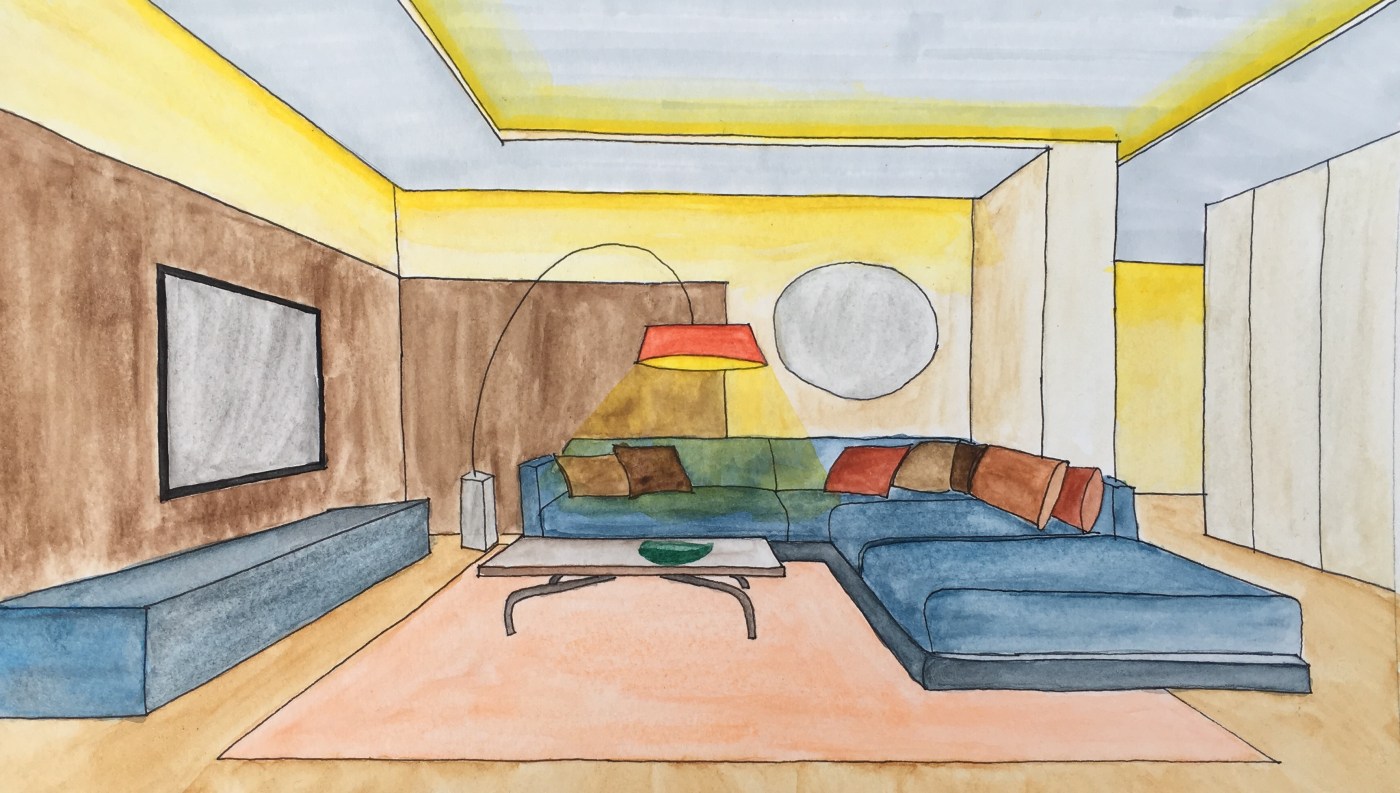
Aahh, the living room! Isn’t that the space we spend most of our time at home? Well, therefore it should be the place where we feel most comfortable. It is also the space where our taste goes live! Some people like it more organized, some people like it more comfy, some people say they need free space… Well, if you take 10 people, each one of them will have a different view on how the living room should be. Not bad, we are different anyway!
The lighting of this individual space should take into consideration the habits of the people using it. Do they read, watch movies, work, welcome friends and guests, have parties, is the space also serving as working space? Well, there are many functions which can be attributed to the living room space and the lighting should be planned accordingly.
In general, we can say that the lighting is composed of three different elements:
- Background lighting – in this case, integrated into the furniture
- Decorative lighting – an object place in a strategic position
- Highlights – select the right elements to draw attention to
In the examples we chose to present here, the spaces vary from a more formal interior design – main image above – going to a comfy space or a multi-functional room. There aren’t rules, which could be applied to living rooms, but one we always follow is the integration of the lighting into the furniture, walls or ceiling, as you will see. In that sense, all “functional” lighting is kept invisible. On the other hand, decorative lighting can turn out to be an element of interest in the space.

In the space above, lighting integrated into the shelves is essential to create a soft, dimmed light for watching TV or relaxing on the sofa. A decorative luminaire can work to enhance the cozy atmosphere. For the working table below the window, a task light is provided for night work, as during the day abundant daylight falls through the window. In this space, the desk has a good strategic position, as the eyes can rest on a long distance objects, as we mentioned already in the post Tips – Home Office Lighting.
This room also contains art objects on the walls which are accentuated by spot lights positioned on the ceiling. A lot of care needs to be taken here. The light should highlight the art work rather than spill down to the sofa, as it would disturb someone lying down for a rest.
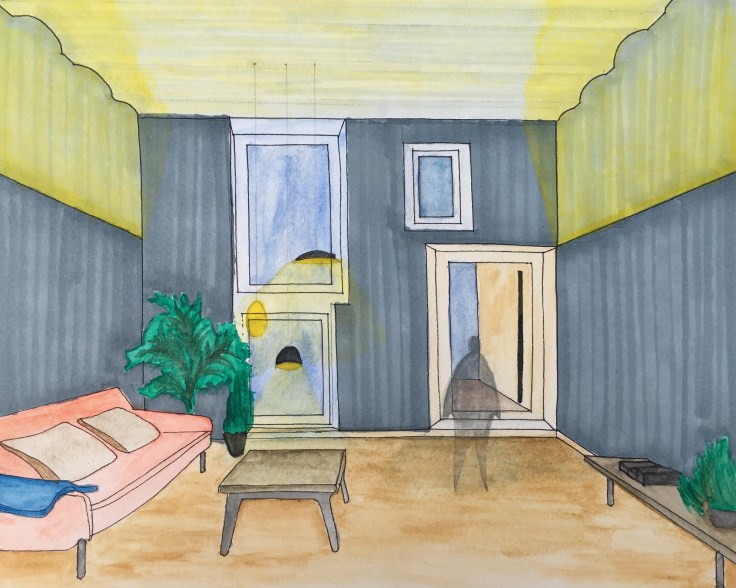
For a space with high ceilings, it is important not to lose the sense of human scale, otherwise the space will render uncomfortable. In the example above, we suggested uplights integrated into a wall detail to highlight the interesting ceiling structure. At the same time, pendant lights above the couch table create an intermediate level in the space. A play of different shapes of luminaires positioned in varied heights can create an interesting eye-catcher for the space. Above all, large windows contribute to daylight the space and at night turn into lit openings revealing the space inside.
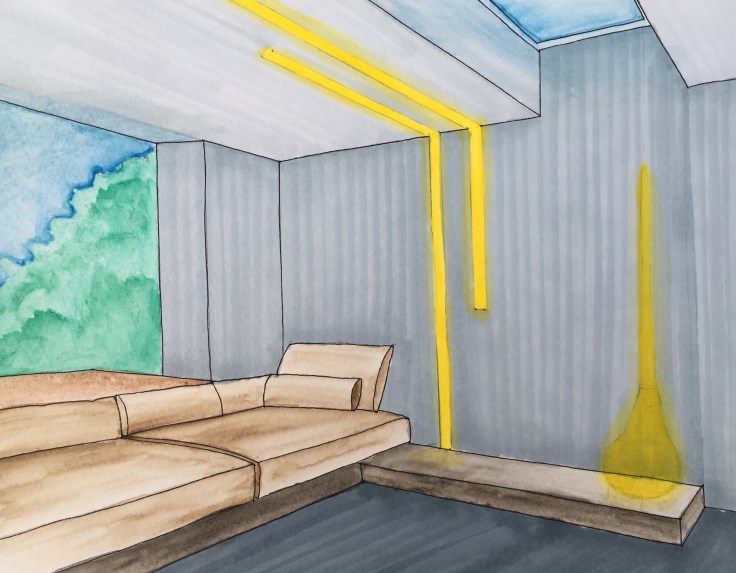
A reading corner can also be a nice, cozy part of the living room. Without elements like the TV or the couch table, this space invites people to lay down and relax enjoying the greenery outside. Here, the suggestion of integrated light lines on the wall and ceiling creates an unexpected scene. Dimming the lights here is most important, as different light levels might be required for day and night-time.
A skylight balances the daylight in the space. The window opening brings daylight vertically into the space, while the skylight accounts for the wider and more abundant daylight distribution brought to the depth of the room. The other lighting element of this scene is the decorative luminaire on the side board wich can be turned on in case less room light is needed.
We hope you have enjoyed the tips in this post. As you see, living rooms can be really different from each other. Like to share your design with us? Get in touch!
See you in the next post.
#thelightingtips © all rights reserved
 The Lighting Tips
Leave a comment