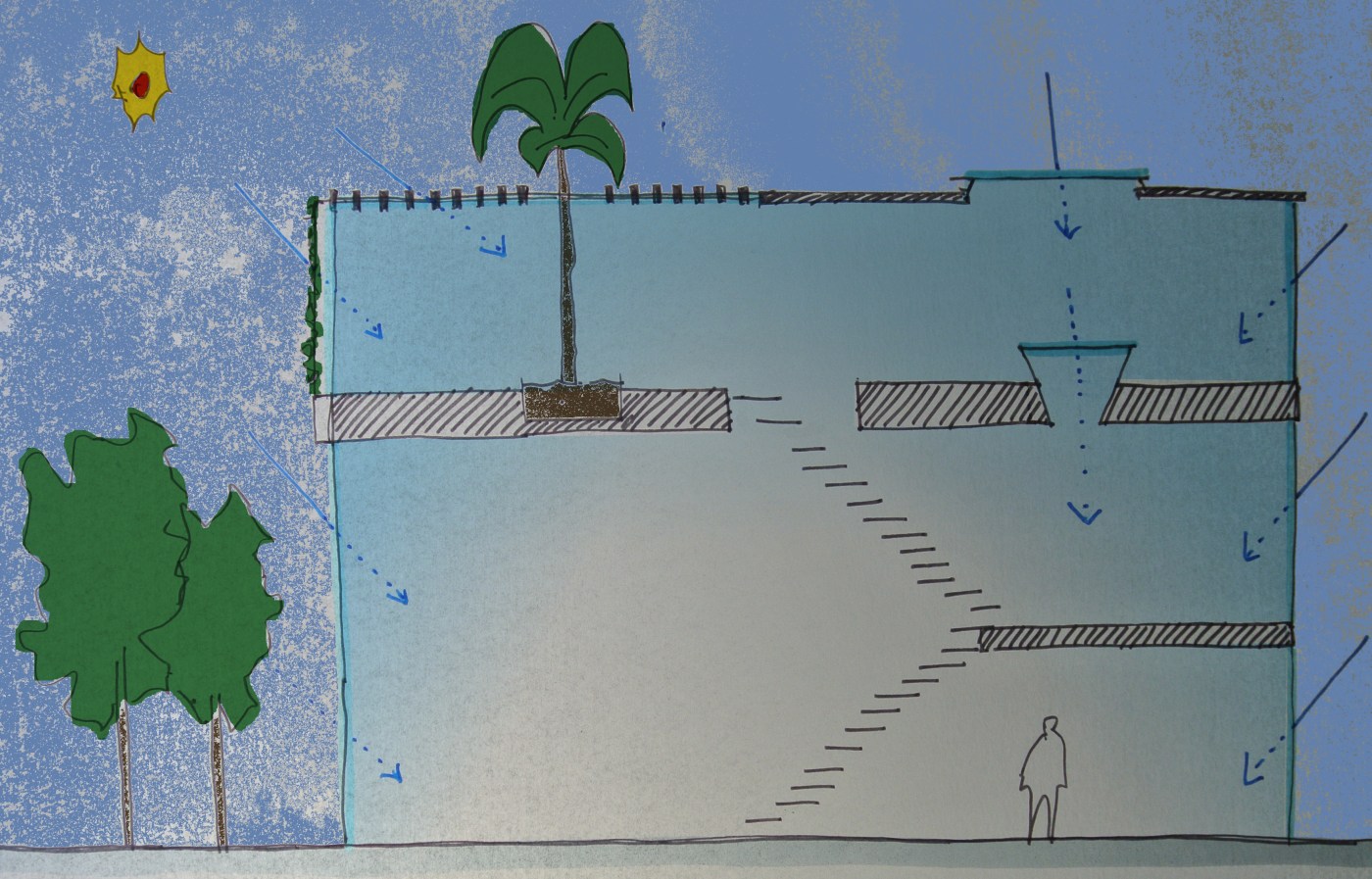
A place to call home is something everyone wishes for. But a home with good daylighting is becoming ever more difficult to get. Increasing the amount of available daylight is something Architects are struggling for in times of increasing urban density.
A home is, or should be, a place designed to support and comfort humans and their needs, these being a safe place to retreat from weather conditions outdoors, a comfortable space where certain activities can take place and in general, a space which supports a healthy life.
Ideally a home will have access to all natural resources needed to sustain human life: water, air and daylight. All the most outstanding homes are designed with exactly these 3 natural elements in mind. A well-lit home will be a livable and inviting space to be in. Water moistures, cools and cleans the air circulating within and around the house while daylight transforms the spaces from morning to evening. Daylight is dynamic in its nature, giving sunlight (warm, direct light), skylight (cooler, diffuse light), warmth, brightness, play of shadows and even darkness. The way daylight is filtered and reflected on the surfaces and reach the interiors to achieve a sense of enclosure and at the same time openness, makes one feel protected and blessed by the natural elements.
The key gesture to get more daylight inside spaces is to play with the architecture itself. A common squared/rectangular building seldom does the trick. It is in new forms that more interesting spaces are created and that’s where there’s space for daylight.
I think there are a few principles which should lead the creating of spaces that use abundant daylight. Here I’m listing some:
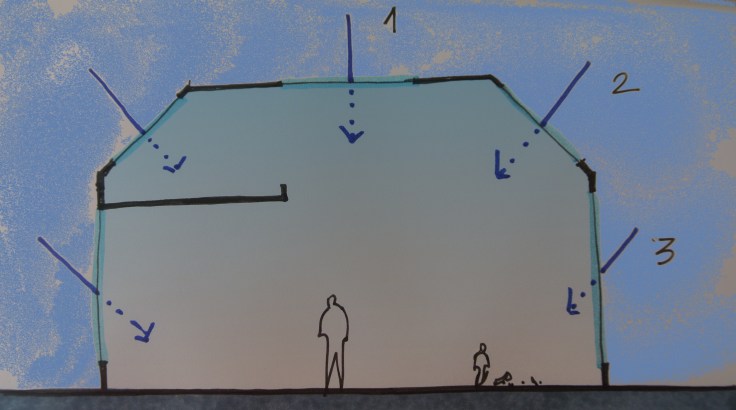
- Play with openings – daylight comes through the openings, vertical AND horizontal. So, it is always clever to think how to introduce openings with different orientations, windows facing all directions as well as skylights in order to get most of the daylight available and also bring it deeper inside the spaces.
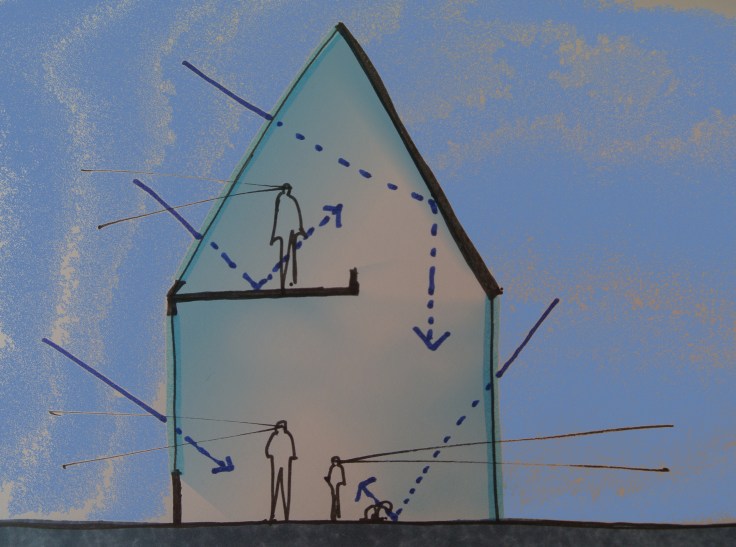
- Play with reflections – daylight is distributed also by reflections occurring on the surfaces of the buildings. A dark facade will reflect less daylight than a brighter one. The same happens with both exterior and interior walls. It is about colours as much as it is about materials, outside as well as inside.
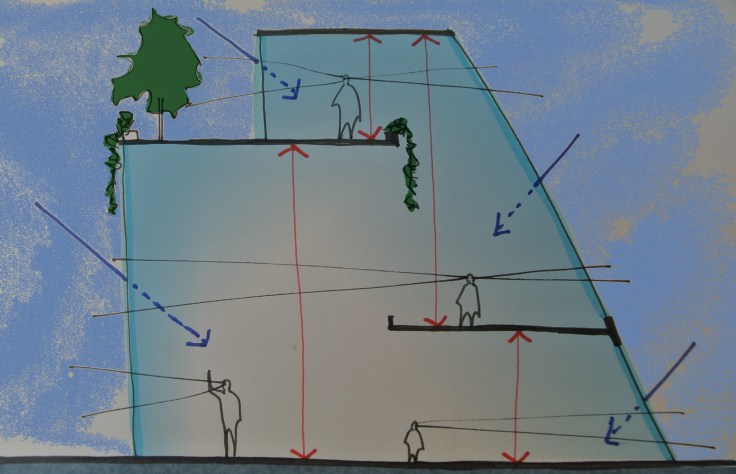
- Play with room heights – very low rooms are very seldom described as bright and well daylit. It’s more about the interplay of high and low spaces that will create a sense of dynamics and a feeling of daylight provision within the spaces. Architects sometimes create beautiful spaces just by playing with room heights.
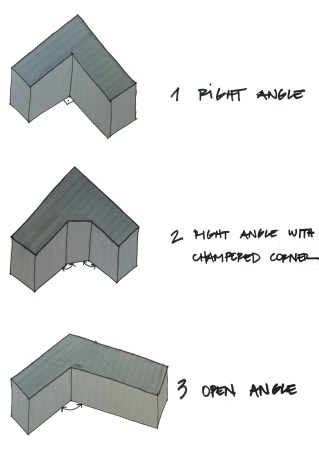
- Play with open angles – buildings tend very much to be a box. But this doesn’t mean it has always to be like this. An open angle (drawings 2 and 3 with greater angles than 90 degrees) will physically spread the building’s slabs avoiding self-shading building masses.
- Play with nature – sometimes the orientation of the building allows too much daylight in? In this (lucky) case, it will be necessary to filter daylight. Many systems can be used, but to keep it simple, I suggest to play with nature and plant trees and oder higher vegetation in order to protect the facades. In tall buildings, terraces can be created to introduce nature to higher levels besides the ground floor.
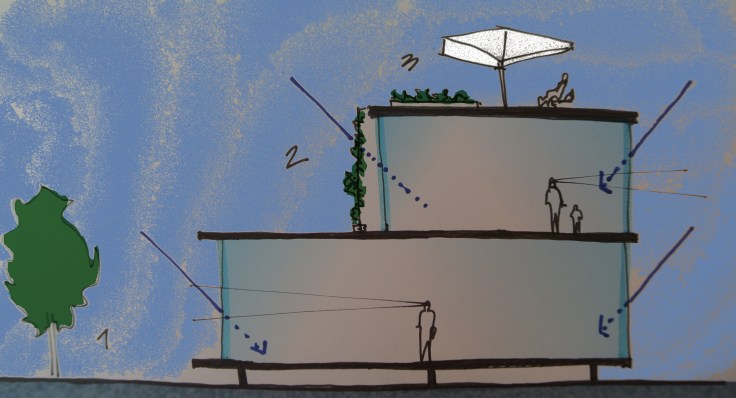
I hope these principles will help you create beautiful spaces and use the most of the daylight available at your place. Please share your experience as user and planer. It would be great to have an open discussion here.
See you in the next post.
#thelightingtips


Leave a comment